Introduction: The Material Behind Modern Automotive Innovation
The automotive industry is evolving faster than ever. Vehicles today must be lighter, stronger, more fuel-efficient, and environmentally friendly. Electric vehicles (EVs) and hybrid cars are becoming common. At the same time, manufacturers must reduce production costs while maintaining high quality.
So how are automotive companies meeting all these demands?
One powerful answer is cast iron powder.
This advanced material plays a key role in producing durable, high-performance automotive components using powder metallurgy technology. From brake systems to gears and structural components, cast iron powder is helping create next-generation automotive parts that are reliable and cost-effective.
In this blog, we will explore how cast iron powder works, why it is important, where it is used, and why leading manufacturers like Comune Industries are trusted suppliers in the industry.
What Is Cast Iron Powder?
Understanding the Basics
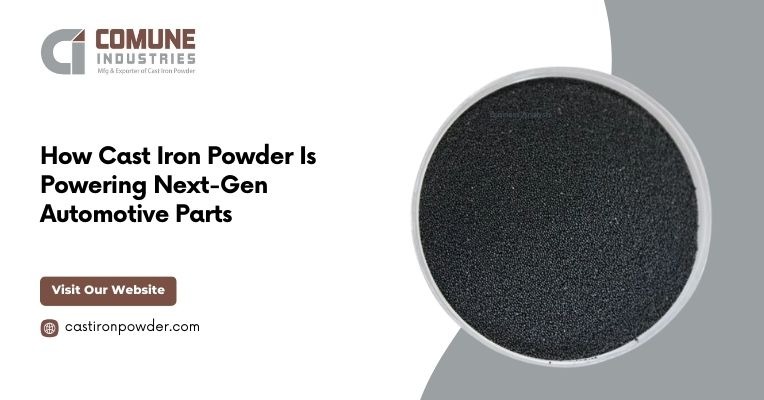
Cast iron powder is a processed form of cast iron that has been converted into fine particles. These particles are used in powder metallurgy to manufacture automotive components.
Unlike regular iron powder, cast iron powder contains higher carbon content. This gives it:
- Better hardness
- Improved wear resistance
- Strong friction properties
- High thermal stability
These characteristics make cast iron powder ideal for automotive parts that face heavy load, heat, and friction.
How Cast Iron Powder Is Manufactured
Step-by-Step Production Process
The performance of cast iron powder depends on its manufacturing quality. Here’s how it is typically produced:
1. Melting
High-quality cast iron is melted in controlled furnaces.
2. Atomization or Crushing
The molten metal is broken into small droplets or mechanically crushed into powder form.
3. Sieving and Grading
The powder is separated into different mesh sizes like:
- 10–30 mesh
- 30–60 mesh
- 60–100 mesh
4. Quality Testing
Each batch is tested for:
- Chemical composition
- Carbon content
- Particle size distribution
- Flow rate
- Compressibility
Reliable manufacturers ensure strict quality control to meet automotive industry standards.
Why Powder Metallurgy Is Transforming the Automotive Industry
Powder metallurgy (PM) is one of the fastest-growing manufacturing technologies in the automotive sector.
What Is Powder Metallurgy?
Powder metallurgy is a process where metal powders are pressed into shapes and then heated (sintered) to form solid components.
Key Benefits of Powder Metallurgy
Near-net shape production (minimal machining required)
High material efficiency (up to 98% usage)
Lower manufacturing cost
Ability to create complex shapes
Consistent quality in mass production
Because of these benefits, cast iron powder for automotive parts is increasingly in demand.
Key Automotive Applications of Cast Iron Powder
1. Brake Pads and Friction Materials
Brake systems require materials that can handle extreme heat and pressure.
Cast iron powder is used in:
- Brake pads
- Brake linings
- Clutch facings
- Drum linings
Why It’s Ideal for Friction Applications
- Provides stable friction coefficient
- Reduces brake noise
- Improves wear resistance
- Performs well under high temperature
In EVs, braking systems combine regenerative and mechanical braking. Cast iron powder ensures reliable performance in both systems.
2. Sintered Gears and Transmission Components
Gears must be strong, precise, and durable.
Using cast iron powder in powder metallurgy allows:
- High dimensional accuracy
- Reduced machining cost
- Strong mechanical properties
- Mass production capability
These gears are used in:
- Transmissions
- Steering systems
- Engine assemblies
- Differential systems
3. Bearings and Bushings
Sintered bearings made from cast iron powder provide:
- Controlled porosity
- Oil retention ability
- Reduced friction
- Long service life
This improves vehicle reliability and lowers maintenance cost.
4. ABS Sensor Rings
Modern vehicles depend on ABS for safety.
Powder metallurgy helps manufacture precise sensor rings that ensure accurate braking control and vehicle stability.
5. Electric and Hybrid Vehicle Components
Electric vehicles require:
- Lightweight components
- Heat-resistant parts
- Vibration control solutions
- Wear-resistant motor components
Cast iron powder supports all these requirements, making it important for next-generation automotive manufacturing.
Advantages of Cast Iron Powder in Automotive Manufacturing
1. Cost Efficiency
- Lower machining requirements
- Reduced scrap material
- High production speed
- Ideal for large-scale automotive supply
2. Superior Wear Resistance
The carbon content improves durability in high-friction applications.
3. Customizable Properties
Manufacturers can adjust:
- Carbon percentage
- Particle size
- Density
- Alloy elements
4. Thermal Stability
Automotive parts face high temperatures. Cast iron powder maintains structural integrity even under heat stress.
5. Sustainability and Eco-Friendliness
Powder metallurgy:
- Uses recycled raw materials
- Reduces energy consumption
- Minimizes industrial waste
This aligns with global sustainability goals.
Growing Demand for Cast Iron Powder in India
India is emerging as a major automotive manufacturing hub. With government initiatives and EV growth, demand for high-quality cast iron powder manufacturers in India is rising rapidly.
Cities like Ahmedabad have become industrial centers for metal powder production.
Why Choose Comune Industries as Your Cast Iron Powder Manufacturer?
When selecting a cast iron powder supplier, quality and reliability matter most.
Comune Industries is a leading cast iron powder manufacturer in India with decades of experience.
Company Strengths:
- Established in 1988
- Production capacity of 1500 tons per month
- Multiple mesh grades available
- ISO 9001:2015 certified
- ISO 14001:2015 certified
- Advanced in-house testing
- Strong export presence
Their cast iron powder supports:
- Automotive OEMs
- Friction material manufacturers
- Sintered component producers
- Industrial applications
If you are searching for:
- Automotive cast iron powder supplier
- Cast iron powder manufacturer in Ahmedabad
- Reliable sintered iron powder supplier
Comune Industries provides customized and high-performance solutions.
Visit cast iron powder to explore products and request technical details.
Challenges and Considerations
While cast iron powder offers many benefits, engineers must manage:
- Proper mesh size selection
- Controlled porosity in sintered parts
- Correct sintering temperatures
- Compatibility with other alloy elements
Working with an experienced manufacturer ensures consistent quality and performance.
Future of Cast Iron Powder in Next-Gen Vehicles
The future of automotive manufacturing will focus on:
1. Lightweight Engineering
More optimized powder-based designs to reduce vehicle weight.
2. Advanced Alloy Development
Improved blends for corrosion resistance and strength.
3. EV-Specific Applications
Customized powders for electric drivetrains and battery-related components.
4. Sustainable Production
More recycled materials and energy-efficient production technologies.
Cast iron powder will continue to support innovation in automotive engineering.
Conclusion: The Backbone of Modern Automotive Components
Cast iron powder is not just a raw material - it is a foundation for next-generation automotive parts.
It helps manufacturers create:
- Stronger components
- Durable friction materials
- Precise sintered parts
- Cost-effective mass production
- Sustainable manufacturing solutions
As the automotive industry moves toward electrification and smarter designs, cast iron powder will remain essential.
If you are ready to enhance your automotive components with premium-quality cast iron powder, partner with a trusted manufacturer.
Visit castironpowder today and connect with the experts at Comune Industries for high-performance cast iron powder solutions tailored to your needs.